Academia
Fraunhofer-Institut für Physikalische Messtechnik IPM
The Fraunhofer Institute for Physical Measurement Techniques IPM develops and researches innovative measurement methods and applications in quantum sensing, with a particular focus on quantum magnetometry and photonic quantum sensing. Our long-standing expertise in sensor and measurement system development provides the foundation for realizing industrial-grade sensing solutions – from the initial idea and system design through to the final product. The detection of magnetic fields inside objects is possible through contactless measurements from the outside, because magnetic fields, unlike electric fields, can hardly be shielded. At the same time, this presents a challenge for measurement systems based on magnetic field sensors, since virtually all objects in our everyday environment generate magnetic fields of their own (see illustration). It is therefore essential to maintain a high level of control over the magnetic environment of such measurement systems.
Our goal is to integrate high-resolution magnetic field measurements into our systems, enabling the highly precise measurement of a wide range of observables relevant to industrial applications. The systems developed at Fraunhofer IPM are primarily based on optically pumped magnetometers (OPMs). This type of sensor is characterized by exceptional measurement sensitivity, limited only by the laws of quantum physics. In contrast to many other quantum-based sensors, OPMs do not require complex cooling infrastructure.
Through close collaboration with partners from science and industry, we translate insights from quantum research into market-ready technologies. Our measurement systems are built on commercially available individual sensors and are designed to unlock new application scenarios, particularly in the fields of low-field nuclear magnetic resonance (NMR) and non-destructive material testing.
Research
- Quantum Magnetometry: Highly sensitive quantum magnetometers for a broad range of applications in industry and research, including magnetometric flow measurement
- Magnetic Cleanliness: Investigation, characterization, and magnetic cleaning of space components and other parts with critical magnetic properties.
- Magnetic Shielding Technology: Inline-capable magnetic shielding of components using novel spray-coating processes.
- Photonic Quantum Sensing: Analysis and hyperspectral imaging in the infrared range based on nonlinear interferometers using undetected photons


Activities
Magnetic Flow Measurement Based on Quantum Sensors
Magnetic Flow Measurement Based on Quantum Sensors
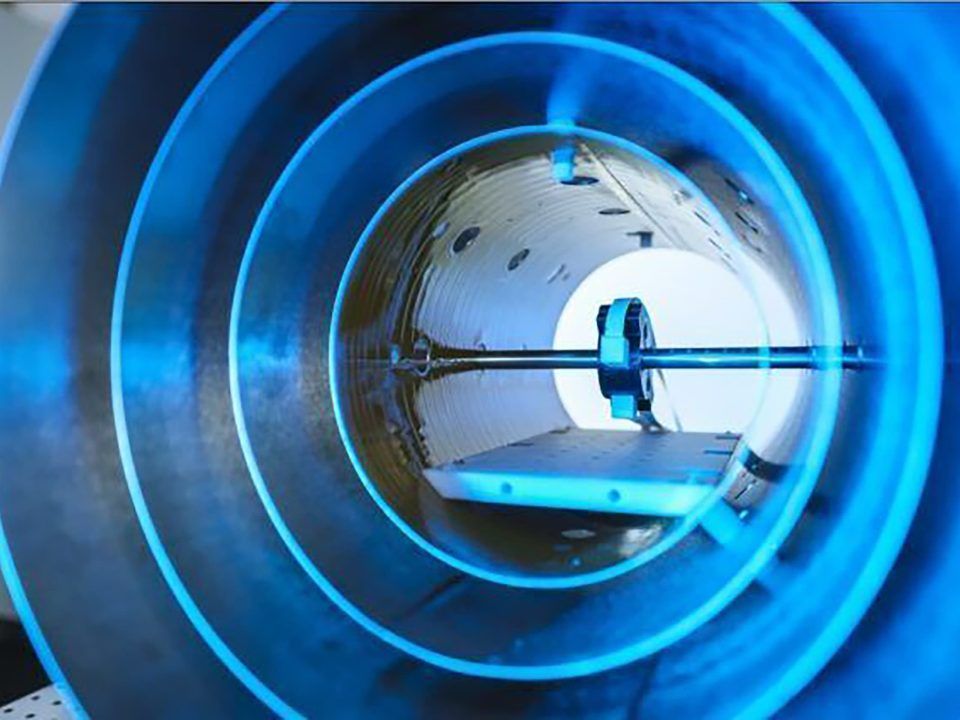
How can a fluid whose flow is to be measured generate a magnetic field? And is such a magnetic field even measurable? These questions can only be answered by considering the concept of a particle’s spin. Spin is a fundamental property of particles such as atoms or atomic nuclei and can be regarded as a tiny magnet that generates its own magnetic field. Using state-of-the-art quantum-based technology, we can measure this magnetic field and thereby determine the flow of the fluid.T o measure flow rates, we have developed a groundbreaking method aimed at extending the limits of conventional flow measurement technologies. Our approach uses the inherent properties of nuclear spins within a liquid as magnetic markers for precise flow measurements. The fluid is first magnetized and subsequently magnetically labelled. These magnetic markers are then detected through a time-of-flight measurement. Our method differs significantly from approaches based on nuclear magnetic resonance (NMR), as the magnetization of the fluid remains static and no characteristic frequency is generated, as is the case in conventional NMR-based measurements.
Get more information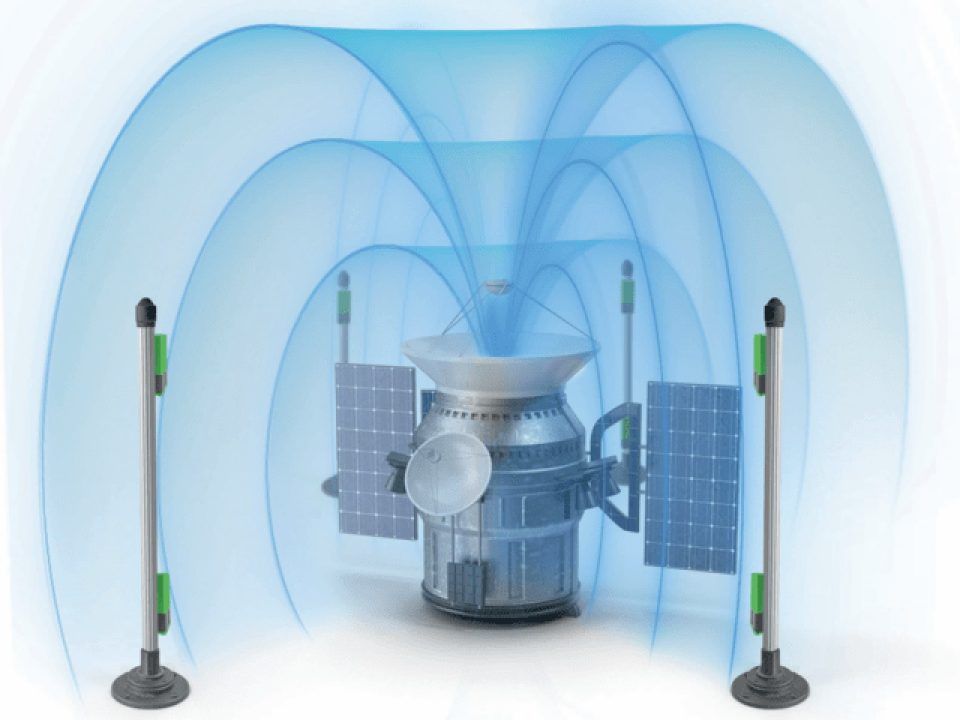
Highly Sensitive Measurement of Magnetic Cleanliness
Highly Sensitive Measurement of Magnetic Cleanliness
In our magnetically shielded enclosure, we measure residual magnetization with femtotesla-level sensitivity. This enables us, for example, to assess the magnetic cleanliness of components and systems intended for use in space. The increasing use of commercial off-the-shelf (COTS) components in New Space applications helps reduce costs, but also introduces potential risks. Even minor residual magnetizations can accumulate and interact with the Earth’s magnetic field, potentially interfering with satellite attitude control systems and onboard electronics. In its magnetically shielded facility, Fraunhofer IPM can measure and assess the magnetic cleanliness of space components and assemblies with sensitivity in the femtotesla (fT) range.
Get more information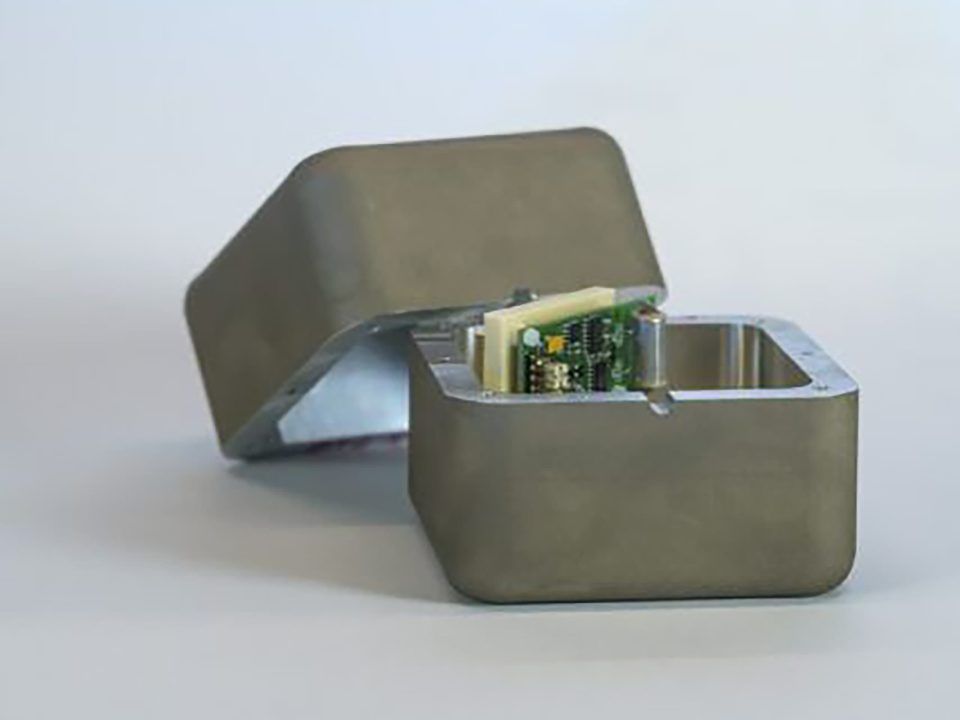
Spray-Coated Magnetic Shielding
Spray-Coated Magnetic Shielding
Tailored spray coatings enable compact, multilayer magnetic shielding solutions. Conventional shielding materials such as mu-metal and other high-permeability metals are highly effective at low frequencies. These materials are typically used in the form of sheets or foils, which can introduce certain drawbacks, such as overlaps and installation seams. Spray-coating technology enables magnetic shielding to be applied directly to the desired shielding geometry. Alternating layers of mu-metal and aluminium or copper are deposited onto complex three-dimensional geometries, ensuring a precise fit. The approach successfully combines the high permeability of mu-metal for direct current (DC) and very low frequencies with the eddy-current damping provided by conductive metals in the kilohertz (kHz) range and beyond. The result is a seamless, compact broadband shield that operates from DC up to 100 kHz.
Get more information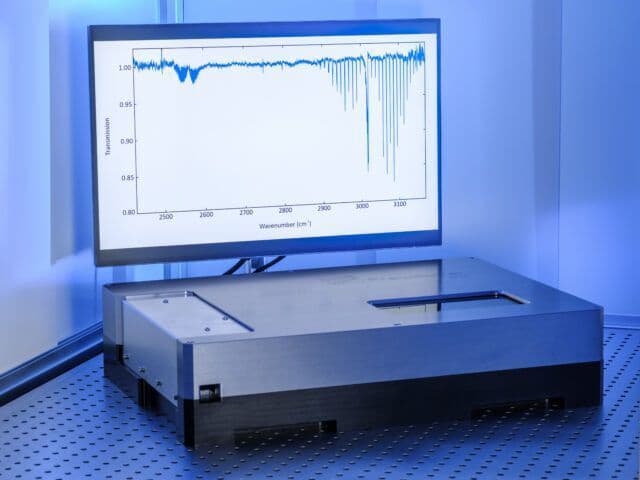
The Quantum FTIR Spectrometer: Analytical Sensing and Hyperspectral Imaging in the Infrared Range
The Quantum FTIR Spectrometer: Analytical Sensing and Hyperspectral Imaging in the Infrared Range
Correlated photons enable novel measurement techniques for high-resolution spectroscopy at low light doses. The mid-infrared spectral range contains particularly rich information about the composition of a spectroscopic sample. However, detectors for this wavelength range are typically technologically complex, expensive, and often require cooling. In contrast, highly capable and cost-effective silicon detectors are available for the visible and near-infrared spectral range. Interference effects of correlated photon pairs enable infrared spectroscopy through the detection of visible light. In our Nonlinear Optics and Quantum Sensing team, we are exploring how this quantum technology can be used for high-performance spectroscopic analysis.
Get more informationDiscover More Content
Become part of Baden-Württemberg’s quantum ecosystem
Are you working on quantum technologies in Baden-Württemberg and would like to learn more about the QuantumBW initiative? Would you like to become part of the QuantumBW initiative and sign a Letter of Intent? Get in touch with us.
Join the Network