- Topic Area
- Subfield
- Topic
Quantization
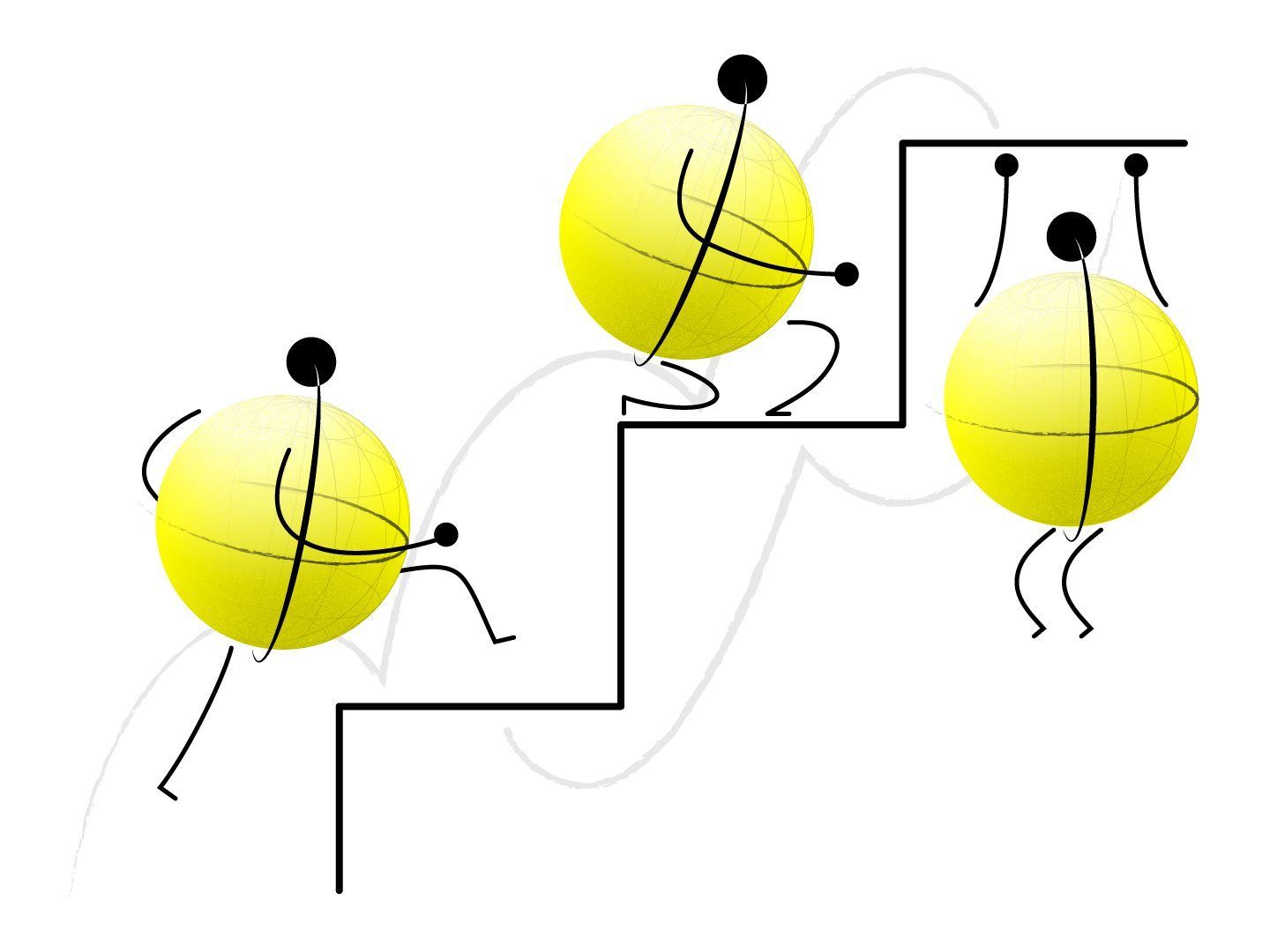
Quantization means that certain physical quantities can only take on specific, allowed values, much like steps on a staircase. Measurements reveal distinct levels rather than arbitrary intermediate values. This does not imply that all physical quantities are quantized or exhibit discrete values. Depending on the situation, an observable may possess a discrete, continuous, or mixed spectrum of possible outcomes. For example, the energies of bound systems are quantized, whereas position and momentum remain continuous variables. Measurement devices register this discreteness as individual detection events, often referred to as detector clicks, even though the underlying evolution of the quantum state between measurements remains smooth and governed by well defined physical laws.
Quantization challenges the classical notion of unlimited continuity. Reality reveals itself not through an arbitrary range of values, but through a set of permitted possibilities. It is precisely this structure that makes many quantum phenomena, from spectral lines to photons, understandable in the first place.
More selected Quantum principles:
Select a subfield within Quantum principles