- Topic Area
- Subfield
- Topic
Quantum principles
The quantum world follows rules that challenge classical thinking. Instead of fixed certainties, it is governed by possibilities, probabilities, and profound interconnectedness. It is precisely in these properties that its power resides, opening new ways to understand matter, information, and reality.
Imagine the world we inhabit as only the visible surface of a deeper reality, a first draft rendered in coarse resolution. Beneath it unfolds a delicate web of possibilities, relationships, and discrete pulses. The quantum world is this deeper layer of reality. It does not replace classical logic, it gives it context. Its principles may seem unfamiliar, yet they are remarkably consistent: nothing becomes definite before it must. Everything remains connected, even when distance suggests otherwise. And even the seemingly continuous reveals itself in countable steps. To approach this realm with familiar habits of thought is to miss what it has to offer. But those willing to think differently begin to glimpse new possibilities: technologies that harness uncertainty, communication that transcends classical boundaries, and a view of reality that is richer, more layered, and more intricate than we once imagined
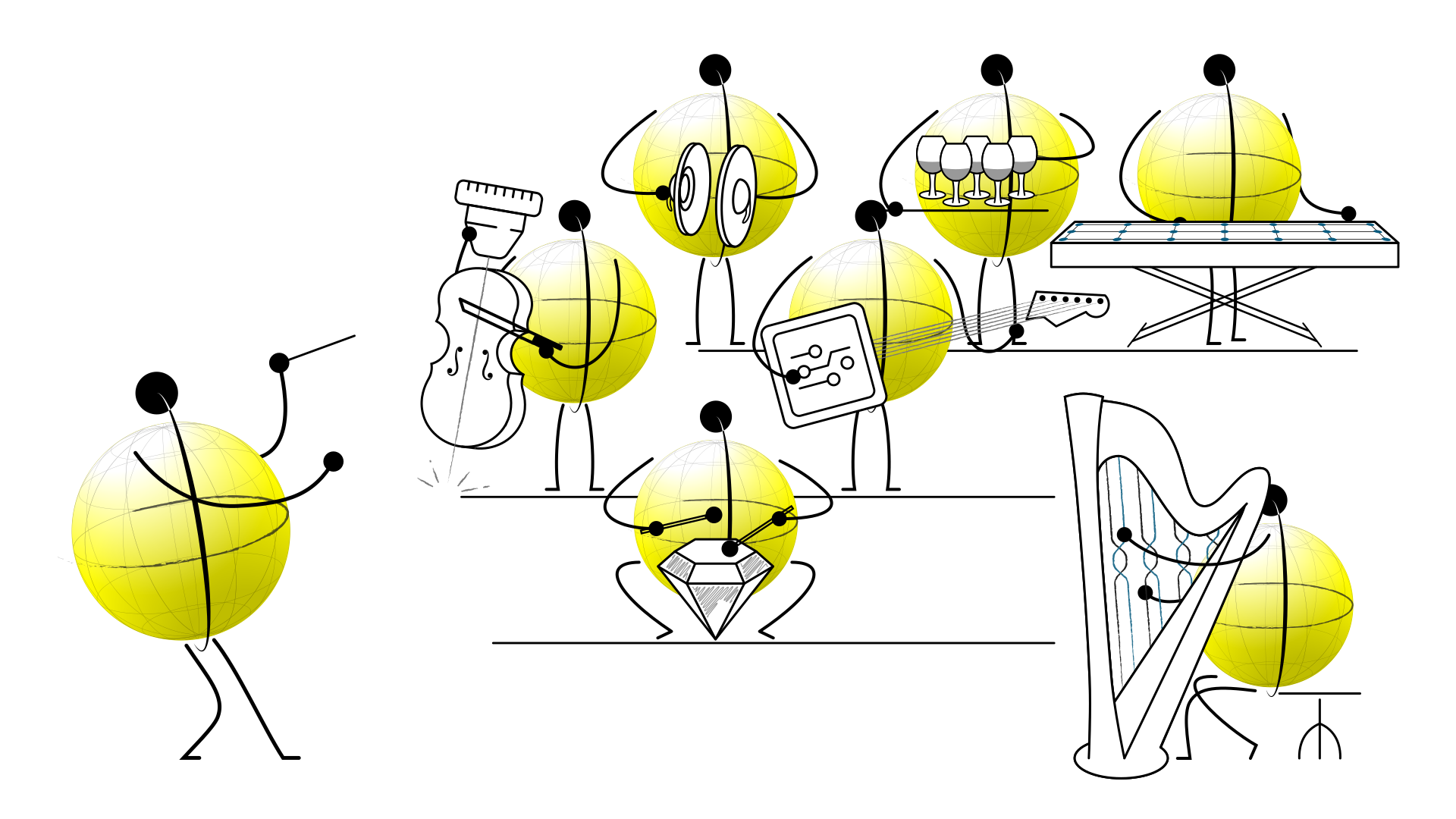
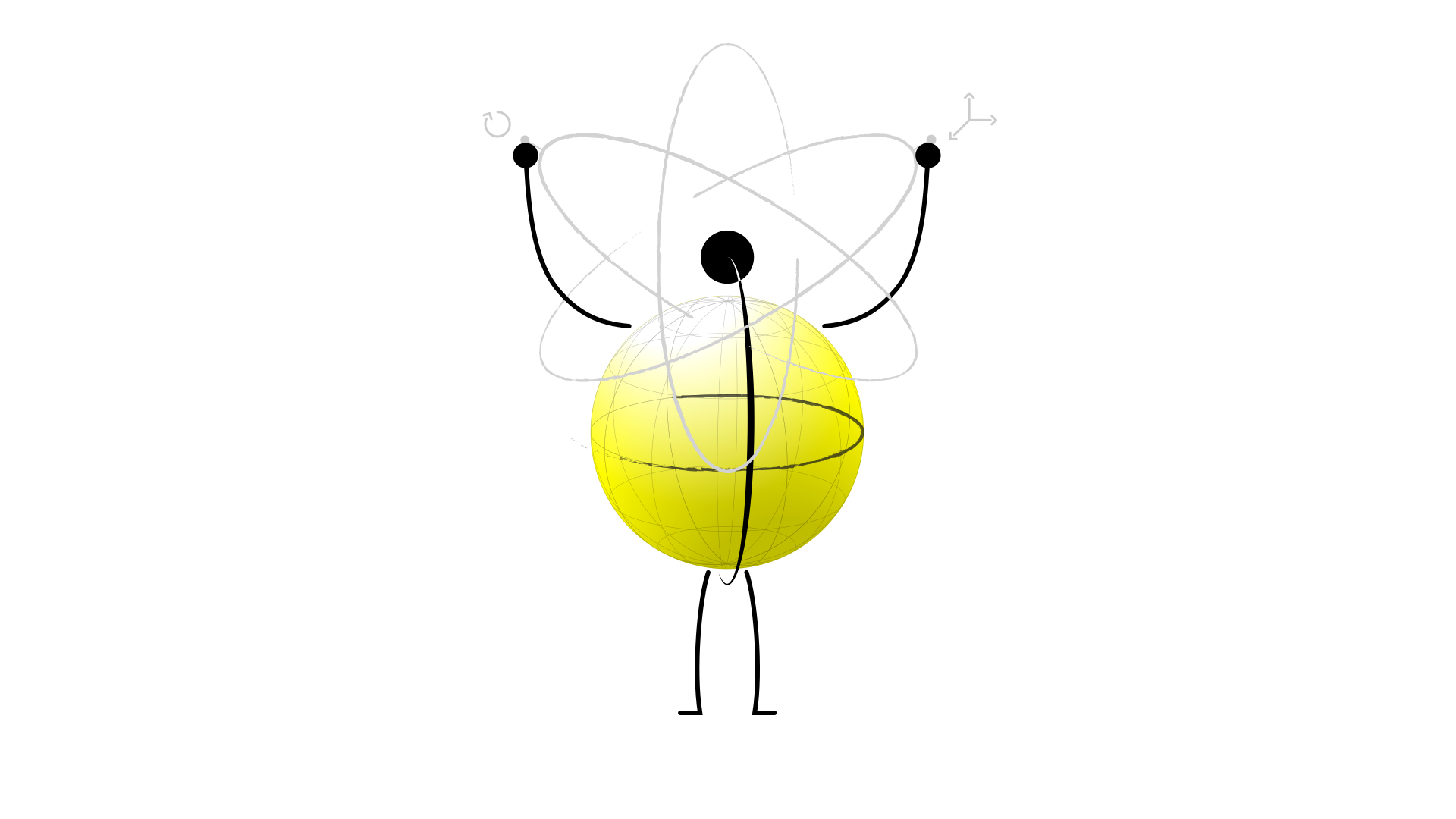
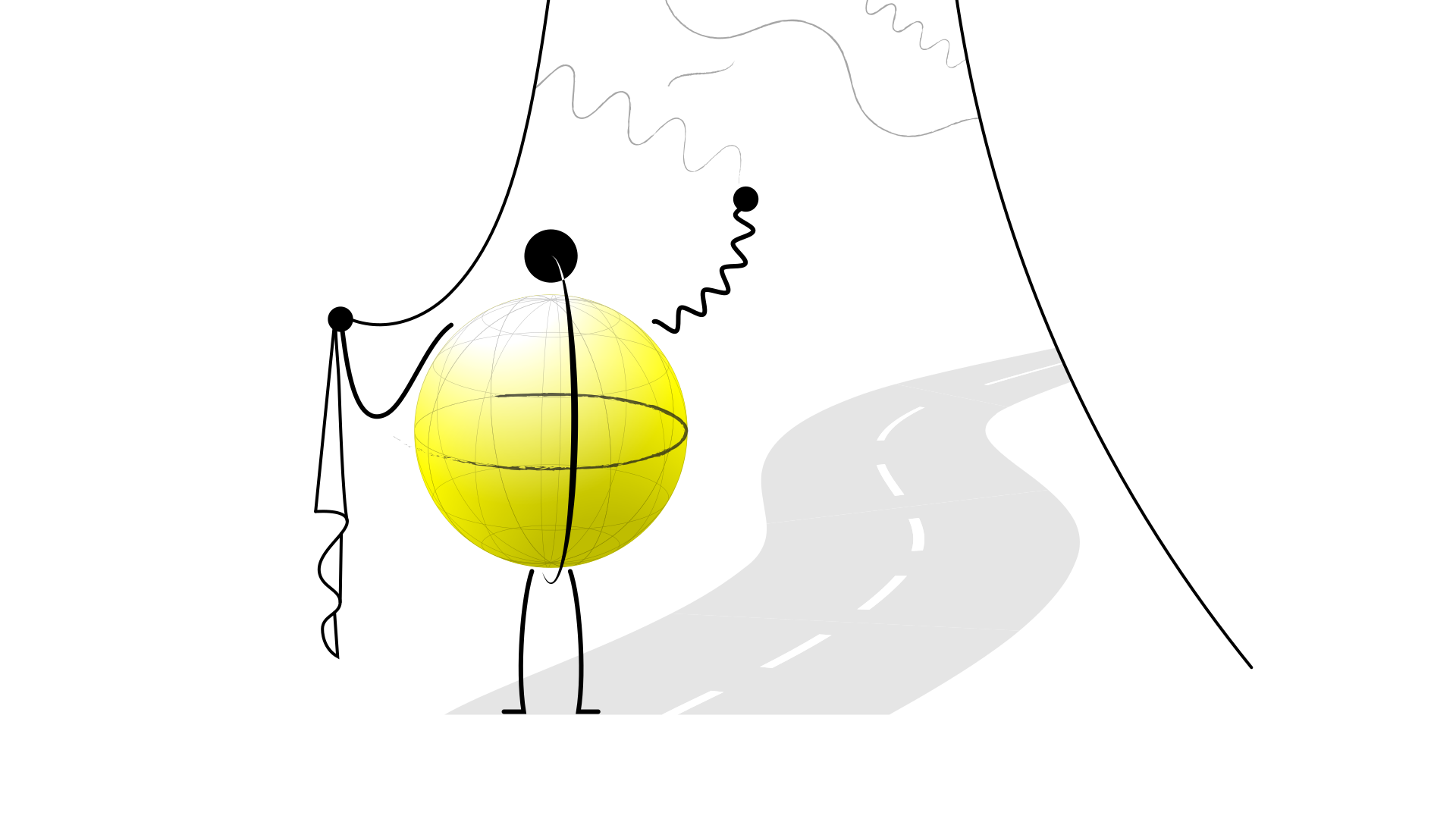
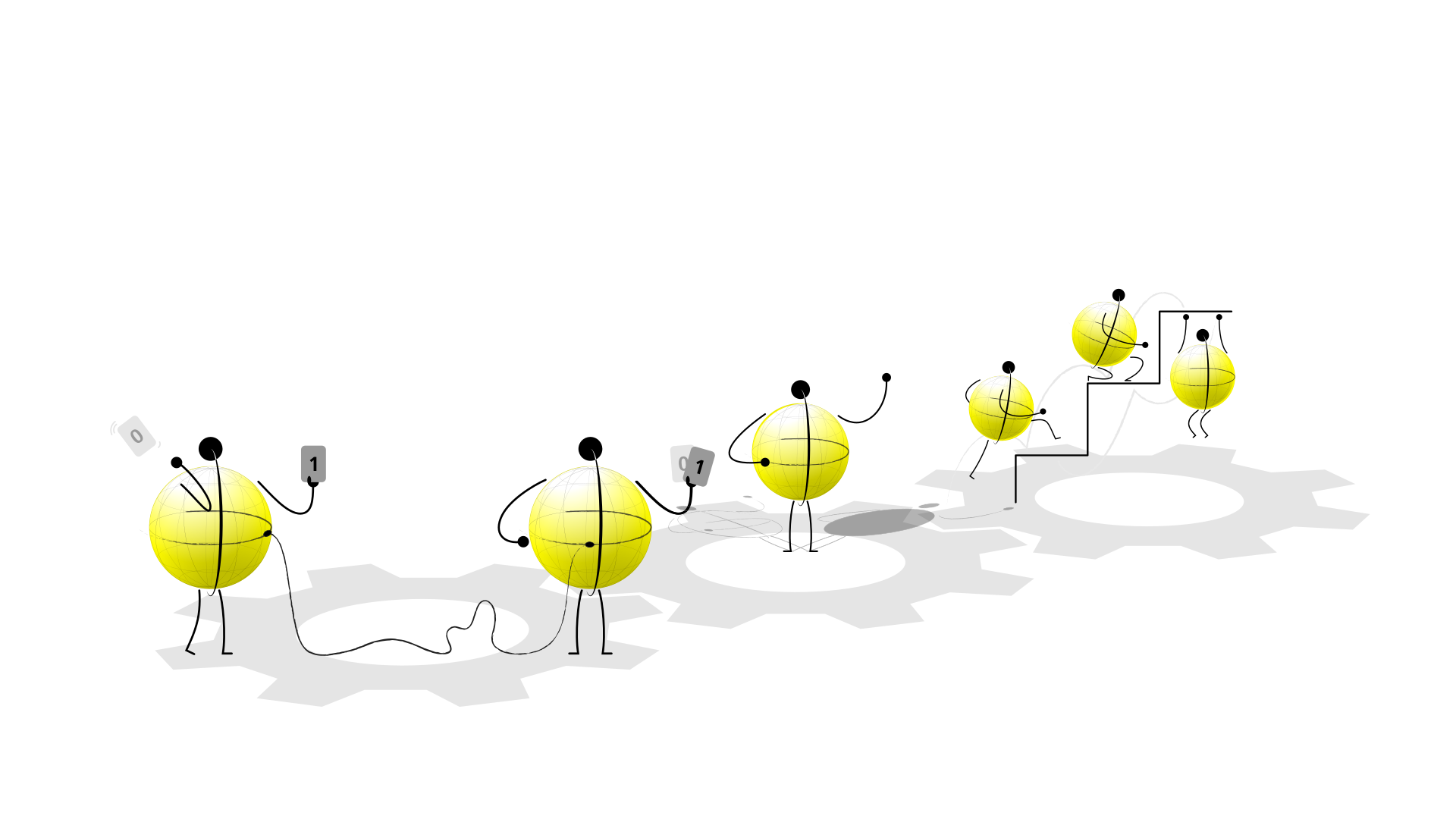
The quantum world opens new ways of understanding matter, information, and reality, providing the foundation for technologies ranging from highly precise sensors to quantum computers. At its core are five fundamental principles: superposition, entanglement, quantization, wave particle duality, and measurement. Superposition means that a quantum system can simultaneously maintain multiple possible states. Only a measurement forces the system to resolve into a specific outcome. This enables interference effects that have no counterpart in classical particles and creates the potential for novel approaches to computation and communication. Entanglement describes the exceptionally strong correlations that can exist between quantum objects. The result obtained from measuring one particle is intrinsically linked to the result obtained from the other, regardless of the distance separating them. This phenomenon forms the basis for secure key distribution and next generation quantum networks. Quantization states that many physical quantities, such as energy or angular momentum, occur not as continuous values but in discrete units. Without this granularity, stable atoms, spectral lines, and semiconductor physics would not exist. Wave particle duality highlights that quantum objects are neither classical particles nor classical waves. Instead, they exhibit characteristics of both, with specific properties becoming apparent only through the act of measurement. Measurement itself is not a passive observation but a physical process through which quantum possibilities are transformed into real, classically accessible information.
Subfields in Quantum principles
Select a subfield within the topic area Quantum principles