- Topic Area
- Subfield
- Topic
Quantum Computing Software
Quantum computing software leverages principles of quantum mechanics, such as superposition and entanglement, to enable novel algorithmic approaches. Its objective is to achieve computational advantages over classical systems for selected problem classes, including molecular simulation, optimization, and factorization. Research efforts focus on developing robust qubit systems and scalable, error correcting architectures.

The Art of Many Possibilities at Once
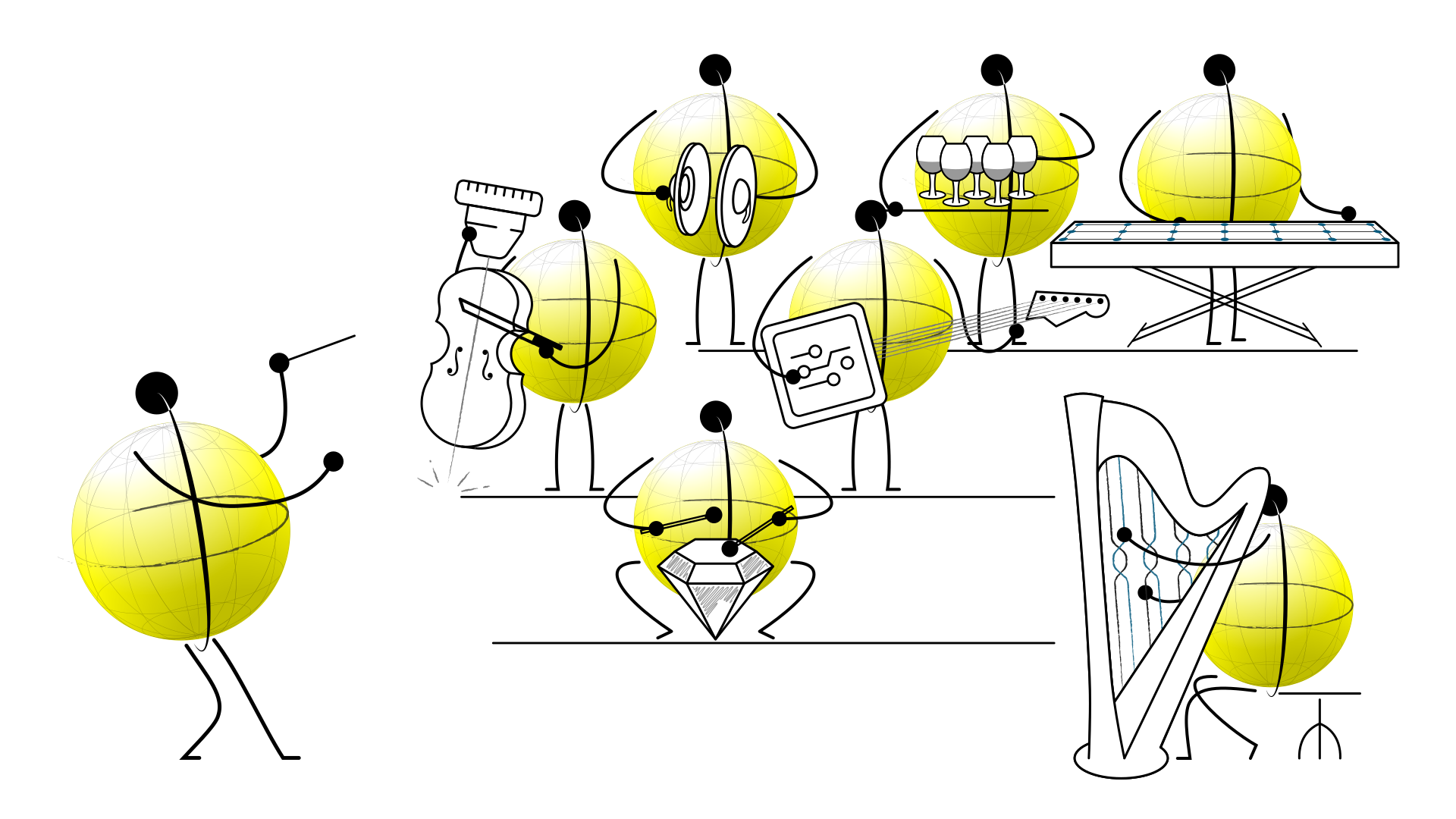
Quantum computing software creates the art of simultaneity. While classical computers proceed step by step, quantum computing opens entire landscapes at once. Qubits can be imagined as paradoxical messengers, existing here and there, now and later, at the same time, weaving networks of information in every moment. Superposition is like a note that resonates across multiple octaves simultaneously. Entanglement resembles two dancers who remain perfectly synchronized in the dark, even though they cannot see one another. Algorithms become pathfinders. They unlock ancient numerical vaults by trying countless keys at once. They cook within nature’s laboratory by not merely describing molecules, but tasting their possibilities. They untangle the world’s networks of movement by dissolving the traffic jams of competing options. Robustness, error correction, and architecture serve as the bridges, railings, and signposts that transform fleeting quantum pathways into reliable roads for practical applications.
Quantum computing is more than science. It is a delicate choreography that deciphers the future secrets of information processing.
Quantum computing software leverages fundamental principles of quantum mechanics to advance classical approaches to information processing. At its core are qubits, quantum computational units that exploit properties such as superposition and entanglement to enable novel algorithmic methods. The objective is to achieve quantum advantages over classical computing, significantly increase computational performance, and address specific classes of problems that are currently difficult or impossible to solve efficiently with conventional systems. These include the factorization of large numbers, the simulation of complex molecules and physical systems, and advanced optimization tasks. Research and development efforts focus on robust qubit systems, precise error correction, and scalable architectures.
Subfields in Quantum Computing Software
Select a subfield within the topic area Quantum Computing Software